
Every fax machine has an identifier that gets transmitted with each fax – like a return address on a letter. This identifier is called a CSID (Called Subscriber Identification) or Station ID.
CSID is different from regular phone Caller ID. Caller ID shows the phone number making the call, while CSID is programmed into the fax machine itself and can include custom text like company names. A fax service might call from one number but transmit a completely different CSID.
When you send a fax through PayPerFax, we capture this identifier from the destination machine when available. You’ll see it in your confirmation email as a sign that we connected to a fax device at the number you dialed.
What CSID Shows
A CSID usually shows the fax number, but can include other information like:
- Company name
- Department name
- Location
- Custom text
The format varies because each machine owner programs what to display. Some show just a number, others include business names.
Every fax machine has a CSID setting. The manufacturer’s user guide explains how to configure it, or you can find it by exploring the machine’s settings menu. Most machines make this setting accessible through their control panel.
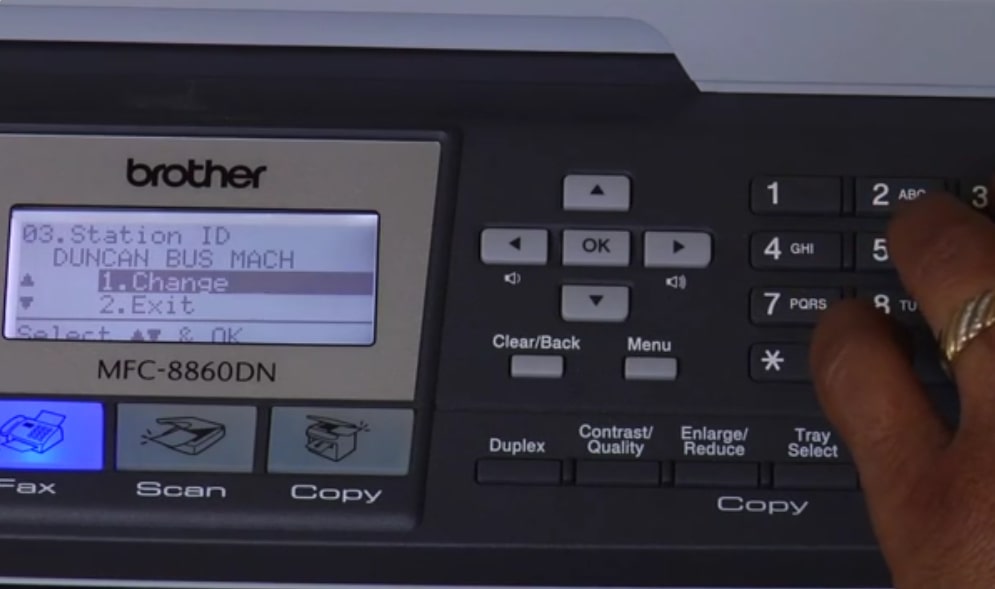
Example: Brother MFC-8860DN showing the Station ID configuration menu.
Image source: YouTube
What CSID PayPerFax Sends
When you send a fax through PayPerFax, we transmit the CSID “Sent via PayPerFax” with your outgoing fax. This identifies your fax to the recipient’s machine or service.
Recipients with display-equipped fax machines will see this identifier, and it typically appears in the header of printed faxes.
When the Destination is a Fax Service
When your recipient uses an online fax service rather than a physical machine, the CSID you receive works differently:
Depending on the capabilities of the destination fax service, the CSID might identify the fax service provider (like “eFax” or “RingCentral”) rather than the actual recipient organization. This is normal – your fax still reaches the intended recipient, but routes through their fax service first, similar to how email routes through mail servers before reaching the recipient’s inbox.
What this means for verification:
- The CSID may show the service name instead of the company name
- The number in the CSID should still match or relate to the number you dialed
- A matching number supports delivery to the correct number, which then routes to your intended recipient
- Some fax services use shared numbers for multiple users, so the CSID won’t distinguish between different end users on that service
Why CSID Matters
The CSID is useful supporting evidence, but it does not prove which machine received your fax. The machine owner programs the CSID, so it can show any text, and some machines send none at all. When PayPerFax captures a CSID, it tells you:
- A fax device answered – The call reached equipment that speaks the fax protocol, not a disconnected number
- A possible match – If the identifier matches or relates to the number you dialed, that supports delivery to the right place
- The handshake completed – The machines exchanged identifiers before the pages were sent
The main proof of delivery is the transmission confirmation itself. The CSID adds context to it.
When CSID Isn’t Available
Some fax machines don’t broadcast their CSID because:
- The owner disabled it for privacy
- Technical issues prevented transmission
- The machine is configured incorrectly
Missing CSID doesn’t mean transmission failed – it just means this verification data wasn’t available. Your fax can still succeed without capturing the destination machine’s identifier.
Technical Details: How CSID Transmission Works
CSID exchange happens during the initial handshake between fax machines, before any document pages transmit.
The Exchange Sequence:
- Calling machine dials – Your fax service initiates the call
- Called machine answers – Destination fax picks up
- CED tone sent – Called machine sends a specific tone (Called station identification)
- DIS signal – Called machine sends Digital Identification Signal containing its capabilities
- TSI transmission – Called machine sends Transmitting Subscriber Identification (its CSID)
- Calling machine responds – Sends its own identifier (CSI – Calling Subscriber Identification)
- Negotiation completes – Both machines agree on transmission parameters
This exchange follows the T.30 protocol, part of the international fax standard. The entire sequence takes just a few seconds.
CSID vs TSI vs CSI:
The terminology can be confusing because different parts of the fax community use different terms:
- CSID (Called Subscriber ID) – General term for the receiving machine’s identifier
- TSI (Transmitting Subscriber ID) – Technical protocol term for the same thing
- CSI (Calling Subscriber ID) – The sending machine’s identifier
In practice, “CSID” and “Station ID” refer to the identifier from whichever machine you’re discussing. </details>
CSID in Your PayPerFax Confirmation Email
Your PayPerFax confirmation email includes the CSID when the destination machine provides it.
Example:
Destination: +1-555-0123
Pages Sent: 3
Status: Sent Successfully
CSID: +15550123 ACME CORP
The CSID shows the identifier the destination machine sent, which often includes the organization’s name.
What CSID Tells You
The CSID can help you check that your fax reached the correct destination:
- Number matches – The CSID number should match your destination number
- Organization name – Many machines include company names
- Consistent format – If you’ve faxed them before, the CSID should match previous transmissions
Mismatched CSID (wrong number or unexpected name) might mean the fax reached the wrong destination, though this is rare with correctly dialed numbers.
Summary
- CSID/Station ID is the identifier transmitted by fax machines
- It differs from Caller ID and can include custom text
- PayPerFax captures CSID from destination machines when available
- PayPerFax sends “Sent via PayPerFax” as the CSID on outgoing faxes
- When destinations use fax services, the CSID shows the service name rather than the company name
- Missing CSID doesn’t indicate transmission failure
- CSID supports, but does not prove, delivery to the intended destination
References