NEW!
Dropbox faxing • Prices in your currency • One-click resubmit • Local times

Does Anyone Still Fax in 2026?
Which industries still rely on fax – and why?
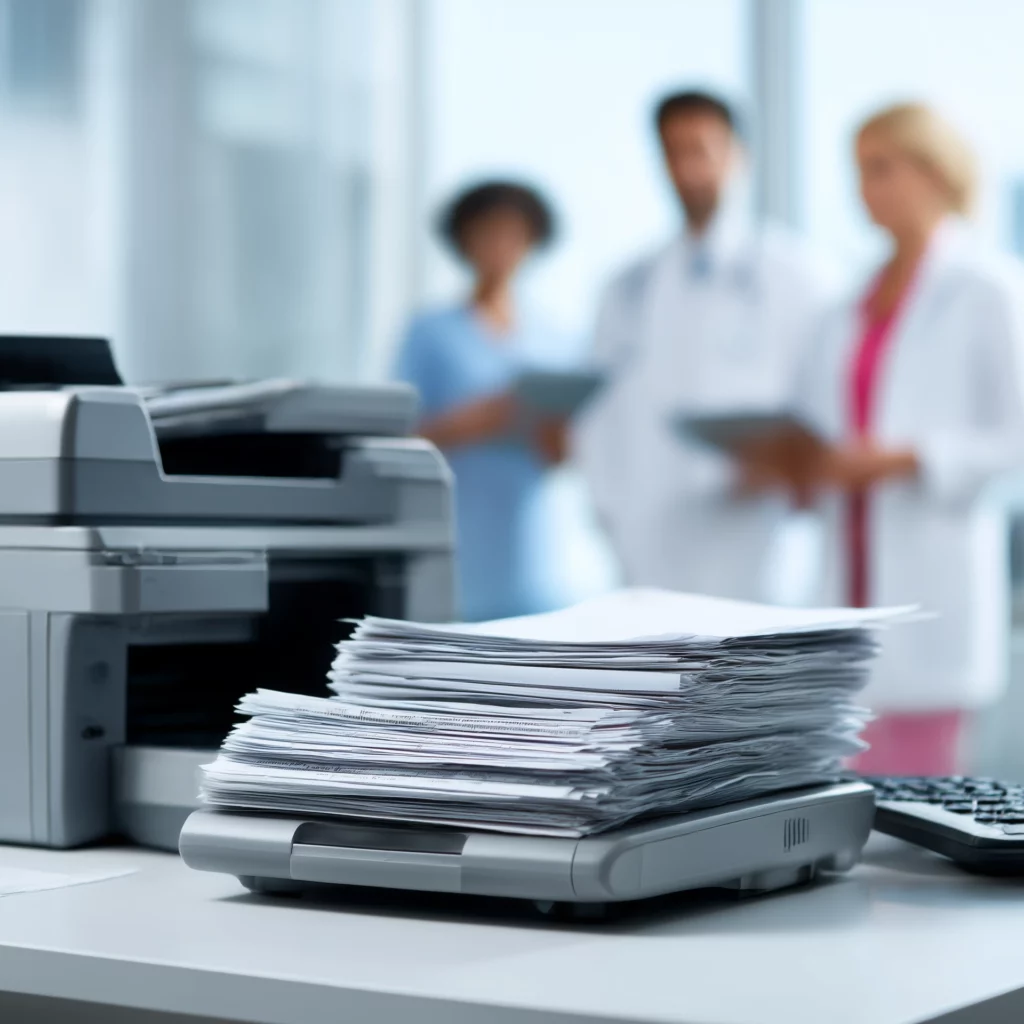
Healthcare and legal services lead the list. Hospitals send prescriptions and referrals by fax because the workflow is fast, the legal weight is settled, and a paper audit trail beats an email thread when a regulator asks. Law firms send it because courts have accepted faxed signatures for decades and changing that costs more than it saves. Add national governments, asset managers and parts of the industrial supply chain, and you have entire sectors that quietly decided fax isn’t the problem – it’s the part that works. This page maps which industries still rely on it, and what they trust it to do.
Latest sector stories
Recent reporting on the industries – and institutions – that haven’t moved on from fax.
-
Why American doctors still fax
The HIPAA carve-out, CMS submission workflows, EHR interoperability gap, and audit-trail argument behind why US doctors kept the fax machine at the intake desk.
-
What happened to Dropbox Fax
Dropbox Fax is HelloFax with a new name. Here is what it costs, what breaks most often, and what to do if your fax just failed.
-
Pennsylvania Rewrote Its Rules on Serving Legal Papers in 2026. It Kept Fax.
Pennsylvania rewrote the rule governing service by fax in 2026, and fax stayed in. Here’s what Pa.R.Civ.P. 440 now says and what the comment deadline means.
-
J&J Faxed a Florida Pharmacy About Xarelto. The Third Circuit Just Called It Junk Mail.
Johnson & Johnson faxed a two-page Xarelto pitch to a Florida pharmacy. A precedential Third Circuit opinion just held it counts as an unsolicited ad.
-
One of America’s Biggest Insurers Just Made Fax the Fallback for ABA Prior Auth
HCSC, the Blue Cross licensee covering 27M members, moved ABA prior auth onto a live phone call in April 2026. Fax stayed on as the compliant fallback.
-
US Healthcare Industry Gets Federal Push to Abandon Fax Machines
New HTI-4 regulation intends to phase out fax machines in medical offices by 2028, ending decades of healthcare’s attachment to this communication technology.
Five sectors that still rely on fax
Each one keeps fax for its own reason – compliance, legal precedent, scale, or simply because the alternative isn’t trusted yet.
Healthcare
Hospitals, clinics and specialists move patient records on fax because the workflow is fast, HIPAA-compatible, and trusted by every referring provider in the network. Manitoba doctors alone process over a million specialist referrals by fax each year – not because they can’t email, but because the chain works.
Legal services
US courts have accepted faxed filings and signatures for decades, and that legal precedent makes fax the safest channel when a signature must hold up later. Law firms keep a fax line because the cost of switching is real and the cost of a contested document is bigger.
Government
National parliaments, federal agencies and city halls run on fax because their legal record-keeping, vendor pipelines and inter-agency workflows assume it. Germany’s Bundestag is the headline case – repeatedly announced “fax exits” that keep getting pushed because too much of government still arrives that way.
Finance
Asset managers and banks still call fax the “backbone” of certain workflows – confirmations, settlements, signed instructions – because the channel is auditable, low-spoof and accepted by every counterparty. The UK asset management industry quietly admitted as much when it tried to retire fax and discovered how much of the chain assumes it.
Manufacturing & trade
Global trade and industrial supply chains still move on fax – bills of lading, letters of credit, customs paperwork between counterparties that don’t share a digital system. An estimated $30 trillion in trade finance flows through documents that include fax in the chain, often because the receiving side is the one that requires it.
Need to fax one of these sectors?
If you’re sending a fax to a hospital, a law firm, a government office, a bank or a trade counterparty, you don’t need a machine – you need a number that works. Send from your laptop or phone, one fax at a time, no subscription.
Send a fax the way these sectors expect
The other end is set up for fax. Use the channel they actually monitor – without buying a machine or a monthly plan.
✴
No machine, no monthly plan
Send from your laptop or phone when a hospital, court or agency needs a fax. Pay for the fax you send, not a subscription you’ll forget about.
✴
Fax government agencies directly
The IRS, the VA, Medicare and student loan servicers all process fax because it’s their established workflow. Send through the channel they’re actually monitoring.
✴
Handle signed and notarised documents
Medical results, notarised affidavits, signed contracts – sectors that take fax seriously expect them to arrive by fax. The staff on the other end know exactly how to process it.
✴
One fax, no commitment
Same delivery reliability these sectors rely on, without taking on their infrastructure. Pay per fax, not per month.
Got a fax to send to one of these sectors?
Hospitals, courts, government agencies, banks – they’re already set up to receive faxes. Send yours without a machine, a subscription or a setup call. Pay for the fax you send.
